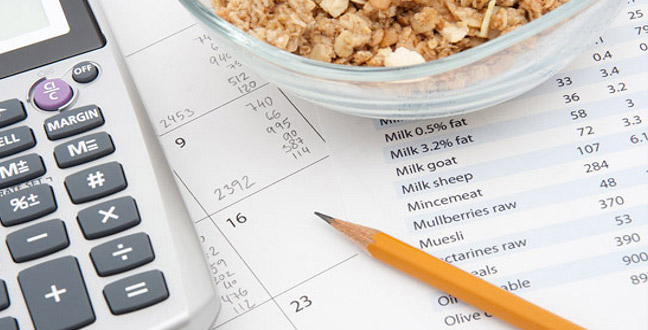
ab workout fitness: count calories
Showing posts with label count calories. Show all posts

Sunday, 6 August 2017

motivational messages


We’ve all had those days…


You’ve just come home from a long day of work or school… you’re physically tired and mentally worn down… you’ve got a thousand non-gym related things on your mind… and all you really want to do is flop down on the couch, relax and unwind.


Only problem is, it’s Thursday. And Thursday is leg day. And no matter how much you try to rationalize it in your mind, deep down you know there’s just no good excuse to skip this workout, even though you’d love nothing more than to stay right where you are and not move a muscle.


Sound familiar?


Yes, even the most motivated of trainees still experience “off days” every now and then. Days where laying in bed and watching Seinfeld re-runs seems like a much more appealing course of action than getting into the squat rack.


So, what should you do in those situations when, for whatever reason, you really just don’t feel like training and can’t seem to find the motivation to make it happen? Or what if this lack of inspiration is an ongoing occurence for you and you’re finding it very difficult to stick to your fitness plan each week as a result?


The solution is dead simple…


Stop thinking about it and start taking action anyway


See, most people think of action and motivation as being strictly a one-way street. In other words, you feel a sufficient level of motivation, and that inspires you to carry out a specific action.


In reality though, it works both ways.


Not only does motivation cause you to take action, but taking action also causes you to feel increasingly motivated.


In other words, if you feel completely unmotivated to do a particular task but begin taking action anyway in spite of how you feel, you’ll often find that the simple act of merely doing something in and of itself is the very catalyst that causes you to feel increasingly motivated.


This then feeds back on itself, as more motivation inspires further action, and further action inspires more motivation, and before you know it, you’re fully absorbed in the original task that seemed so daunting and insurmountable to begin with.


So, instead of sitting around in your current “uninspired” state and merely hoping that you’ll magically feel some big surge in motivation to get you into the gym… instead realize that the very act of taking positive actions towards performing your workout is often the very thing that will produce the motivation you’re looking for.


The state of mind that you feel as you sit on the couch ready to fall asleep is NOT the same state of mind that you’ll be in while you’re performing your actual workout.


Rather, all of the small actions that you take leading up to your workout, through your warmup and through the first set or two of your session will gradually “shift” your state of mind in a positive direction, so that when it comes time to perform the bulk of the actual challenging work, you’ll already be in that pumped up and motivated state you were originally searching for.


Again, stop thinking and just start taking action anyway.


Stop creating mental pictures of what lies ahead… stop creating “what if this” and “what if that” scenarios in your mind… stop trying to weigh out the benefits and drawbacks of performing or not performing your workout…


If you’ve already made the commitment to yourself and know that the right thing to do is to get into the gym and train, then shut off your mind and just do it.


Stand up… change into your gym clothes… pack your bag…


Even these tiny little actions will kick-start this “state-shifting” process.


Have your cup of coffee, pre-workout supplements or whatever else you usually consume prior to training… walk out the door and start making your way to the gym…


Again, these additional small actions will cause your state to shift further.


Walk onto the gym floor… put your headphones on… begin warming up and moving your body…


Far more often than not, you’ll find that by simply taking all of these individual actions leading up to your actual workout without over-thinking or over-analyzing it, your mindset will shift all on its own and automatically produce the motivation and inspiration you need to tackle your workout with full intensity.


By the time you get past your first few sets, the rest of the workout will usually not only be smooth-sailing, but will actually be fully enjoyable as well, especially since you’ve now reinforced in your mind the fact that you’re a self-motivated person who takes action regardless of the circumstances.


This concept applies not only on the micro-level of individual workouts, but also on the macro-level of your overall fitness program as a whole.


That’s because once you begin taking action consistently and have built up a solid track record of successful workouts over the course of a few weeks or months, it will quickly turn into an automatic ingrained habit that you simply do without thinking too much about.


In fact, you’ll likely begin looking forward to your workouts and will genuinely enjoy performing them rather than viewing them as some unwanted chore that you need to “get over with”.


So, if you’re still a beginner and have been struggling to really get things off the ground with your muscle building or fat loss program, just know that the early stage is always the most challenging part by far, and that it only gets easier and easier with each passing week.


And here’s the most important take away from this article…


This principle can be applied to every area of your life beyond just your fitness program.


Any time you’re faced with something that you know you need to do or should do but are feeling unmotivated and overwhelmed by, you can apply this “stop thinking and just take action” principle in the exact same way.


Have a work project that needs to get done but that you really don’t feel like doing? Just take some initial small steps and then harness the momentum of those first few actions in order to motivate yourself further.


Need to write an essay for school but are feeling completely uninspired and uninterested? Just get the first few lines down on the page and then see where it takes you.


Got an invite from a friend to go out but aren’t in a “social mood”, even though you know you should get out of the house? Just go anyway and watch as the state-shifting process kicks into gear once you speak to a few people.


The bottom line here is this…


If you believe that every single action you take requires you to feel fully inspired and motivated right from the get go, you’ll never get anything meaningful done, or at the very least, you’ll only be a fraction as productive as you could be.


If you already logically know what the “right” thing to do is, then stop relying on positive emotions (or the absence of negative emotions) to drive you forward, and just do it anyway!


If you found these tips helpful, make sure to get your personalized training, nutrition and supplement plans watch video presentation   


Sunday, 16 July 2017

the truth about grill meat,


Most people aren't aware that when you cook meat (whether it's grilled, broiled, or seared) there are carcinogenic compounds that can form called HCA's (heterocyclic amines).  Now don't panic...you ingest various carcinogens all the time, even with some vegetables. You can always protect yourself with more antioxidants.


Please Note:  When you cook meat in a water base as opposed to grilling, broiling, or searing, you eliminate the HCAs. So for example, meats cooked in a soup, or meats cooked in a crock pot will not have the problem of the carcinogenic HCAs and is a healthier way to cook meat.


But let's face it... grilled meat tastes awesome and there's no way I'm giving up my grass-fed steak from the grill, or my grass-fed burgers!


That's why it's important to know that there's a way you can use spices to both counteract, and also drastically reduce the carcinogens formed when you grill meat...


If you're going to grill meats, marinating meats for hours beforehand in liquid mixtures that contain rosemary and other herbs/spices can dramatically help to reduce HCA's (heterocyclic amines), which are carcinogenic compounds that can form when meats are grilled.  So using rosemary, thyme, garlic, oregano and other spices in a meat marinade before grilling meats can drastically reduce any carcinogens that normally would form on grilled meat. 


The antioxidants in rosemary and thyme from a marinade were specifically cited in studies at being powerful inhibitors of HCA formation when grilling meats.  But it was also noted that other spices such as garlic, oregano, and others can help to prevent HCA formation as well, so I suggest using a variety, which tastes great anyway!


One more important point about grilling meat:


Remember that the more well-done a meat is cooked, the higher concentration of carcinogenic HCA's can form, so rare, medium-rare, or medium are healthier choices than well-done.  I've never understood why anybody would want to ruin a good steak by burning it to oblivion anyway.  But hey, if you're one of those folks that likes your steaks well-done, just remember that you're eating a lot more carcinogens than a steak that's cooked less, so make sure to load up on your antioxidants (spices, teas, berries, etc) to help combat those extra carcinogens.  


Washing down your barbequed meal with a glass of unsweetened iced tea (rich in antioxidants) and also a good salad with lots of raw veggies can provide the antioxidants needed to counteract the effect of HCAs in your body from grilled meat. 


By the way, even charring vegetables on the grill creates different carcinogens such as acrylamides, so don't think that the negative effect of charring only applies to meats.


Hey, we all love a great barbeque, so no need to give that up just because of HCAs or acrylamides, but at least now you know how to counteract the effects of these in your body to protect yourself, and also how to use spices to drastically reduce the formation of HCAs on grilled meat!


Lastly, did you know that the TYPE of meat you may be grilling on a regular basis can be destroying your metabolism and health?


It’s true!


The truth is that grilling a grass-fed steak, burger, organic chicken breast or thigh, and many other types of meat can not only be on of the healthiest meals to prepare, but also BURN belly fat because of the high protein content, healthy CLA fats, as well as full amino-acid profile, and many other fat-fighting and metabolism boosting qualities of high quality meat…


However, you really need to pay attention to the type of meat you’re purchasing.  While many health and medical experts caution the consumption of meats claiming they can “cause heart problems,” and many other scare tactics, there are no scientific studies showing this when you're talking about high quality, organic and pasture-raised meats.  Most of the negative studies on meat refer to processed meats laden with chemicals, such as hot dogs or lunch meats, but not a good grass-fed steak.


Animals that are raised in high-population commercial farms are fed mostly corn, corn by-products, and other grains, that completely change the chemistry of the meat you’re preparing.


They turn an otherwise healthy & fat-fighting meal into a health-destroying, inflammtory, fat-GAINING meal.


So the next time you’re at your local butcher or grocery store, make sure to seek out the highest quality pasture-raised meats, loaded with more vitamins, minerals, and healthy fats.


Not only will they taste better, but they’ll also be much better for your waistline and health.


Friday, 30 June 2017

how to protect your hormones


If you care at all about your body and health, I'm sure you already know to avoid the obvious sugary cereals like the flakes with sugar frosting, the fruity sugar cereals with artificial colors, the frosted wheat biscuits, or the marshmallow cereals that so many parents are poisoning their kids with these days.


However, even most breakfast cereals that aren't frosted in sugar are marketed heavily as "heart healthy", "rich in fiber", and "a good source vitamins & minerals"... Unfortunately, nothing could be further from the truth!


As a Nutritionist that's studied the biochemistry of nutrition for over 25 years, and how certain foods affect the cells of your body, there are at least 10 important reasons to be extremely concerned about what cereals are doing inside your body.  I'll touch on a few of the important details in this short article...


Most cereals (even "whole grain" or "high fiber") cause extreme harm to your hormones and create runaway blood sugar in your body


One of the WORST things about most cereals, even so-called "whole grain" cereals is that they ALL cause a significant spike in your blood sugar (regardless of whether they are wheat, rice, or corn based) to dangerously high levels, which results in a cascade of fat storing hormones to be released in your body, and causes more carb cravings later in the day. 


This is NOT the way to start your day if you care about your waistline or how much belly fat that you have.


In fact, even cereals that have added fiber (such as bran flakes or raisin bran) have been found to cause just as much of a massive spike in blood sugar as the low-fiber cereals such as rice or corn based cereals.  Remember that the starches in wheat, corn, or a bowl of rice cereal break down quickly in your body into SUGAR and immediately do as much harm to your blood sugar regulation system as if you ate 40-60 grams of pure corn syrup or pure table sugar.


Those massive spikes in your blood sugar essentially damage your cells in your body through a process called glycation, which accelerates the rate of aging in your joints, skin, organs, and even your brain.  Ouch...  That tiger on the cereal commercials is never going to warn you about that!


And speaking of hormones, another effect of high blood sugar is that it blunts the ability of your body to release growth hormone (aka, the youth hormone), so if you want to look and feel younger, cereals are NOT helping you in that department!


Note:  Regarding the claims that cereals are a "good source of vitamins and minerals", this is actually FALSE... The majority of vitamins and minerals in most cereals are not naturally occurring, but rather, are synthetically added vitamins, which have been proven to be less absorbed than natural vitamins and potentially even harmful in some cases.  As an example, synthetic vitamin E is shown in some studies to be harmful to us, while natural vitamin E is beneficial.


Crunching your way to Diabetes and belly fat every morning?


Think about this next time you're gobbling down that bowl of bran flakes, rice puffs, or wheat biscuits while you're running out the door in the morning...


The more cereal you eat, the more you constantly stress your pancreas and other organs involved in controlling your blood sugar.  Insulin levels surge every day to try to control your massive blood sugar attacks from all that cereal, and eventually, your insulin sensitivity suffers, leading many people to type 2 Diabetes, and a life of injecting insulin with needles and stabbing your fingers every day for blood tests every day of your life.


Not only that, but causing high insulin levels in your body every morning by eating cereal also triggers your body to STORE body fat.  So if you want to be lean, cereal is directly going against your goal, and only making you fatter!


Gut Inflammation and even gut damage?


More bad news about cereal...


Any cereals with wheat ingredients in them can possibly cause gut inflammation and long term gut damage from too much gluten and lectins, even if you're not officially gluten intolerant or gluten sensitive. 


Think those corn-based cereals are better than wheat?  Think again!  Corn-based cereals are almost always made with GMO corn, which has many scientists very concerned about long term health threats, since there are no long term studies on the effects of GMO corn to your health, as well as your children's health.


And rice-based cereals (krispies, etc) aren't much better, as they cause just as high of a blood sugar spike as pure table sugar... Ouch!


Cereal causes CRAVINGS for more carbs later in the day, leading to excess calories


The blood sugar spike and subsequent insulin surge from your morning cereal makes your body to try to get all that sugar out of your blood and into cells (usually fat cells), and that causes a big drop in your blood sugar hours later.  This makes you CRAVE more carb-based or sugary foods later in the day.


The result of this is a constant wild roller coaster ride of blood sugar and insulin all day long, leading you to eat more calories in any given day.


I recently read a study about people that ate egg-based breakfasts vs cereal-based breakfasts...  Even though the people that ate egg-based breakfasts consumed far more fat in the morning, they ended up eating much less calories throughout each day because they didn't have the wild blood sugar swings, hormone imbalances, and subsequent cravings.  Egg breakfasts are proven to CONTROL your appetite, while cereal breakfasts are proven to INCREASE your appetite for more food, particularly more starchy and sugary carbs. 


Cereal makes your body a carb-burner instead of a fat-burner


The more carbs that you eat each day from foods such as cereal and breads, the more you train your body to rely on carbs for energy.  So when your blood sugar dips again, you need more carbs again, or you'll have a major energy slump.


On the other hand, the more that you get most of your calories from healthy fats instead (avocados, coconut oil, grass-fed butter and cream, olive oil, nuts, seeds, eggs, and pasture-raised meats), the more you train your body to be a fat-burning machine.


This is called creating a "fat adapted metabolism" and you do this by reducing your overall carb intake and simultaneously increasing your healthy fat intake.  This doesn't mean you need to go extremely low in carbs like Atkins, but just a LOT lower than the average carb addict, which is pretty much everyone eating a modern diet.


By relying mostly on healthy fats for energy instead of carbs, this balances your hormones and gives you VERY stable blood sugar levels throughout each day, allowing you to also have VERY stable energy levels throughout each day without the typical spikes and slumps in your energy that most carb addicts feel every single day.


Another benefit of creating a "fat adapted metabolism" in your body is that you will naturally lose body fat easier!  There is no magic ratios of macronutrients that's perfect for everyone, nor do I think you need to obsess over exact calories or exact ratios of carbs to fat... However, to give you an idea of how far off most people are... Most people currently eat a diet that is in the range of 60% carbs, 20% fat, and 20% protein.  What I'm describing to you in order to create a fat adapted metabolism would be more around eating 20% carbs, 60% fat, and 20% protein. 


Basically, as you can see, it's like flip-flopping the typical western diet ratios of carbs to fat. 


Healthier alternatives to cereal that are still QUICK (helping you to be a fat-burner instead of carb-burner)


Instead of the typical cereal in the morning (that's slowly killing you and making you fatter), try a bowl of plain greek full-fat organic yogurt (which is loaded with healthy gut probiotics, healthy fats, AND protein) and add in a handful of fresh, organic berries (or frozen wild blueberries), a handful of nuts such as either almonds or pecans (more healthy fats), and a little stevia or vanilla protein for a little added sweetness if you need it. 


This breakfast will leave you leaner, keep your blood sugar, energy levels, and hormones balanced for the day, and prevent cravings for more starchy and sugary carbs later in the day.


Another option is simply any combination of eggs, veggies, avocado, and even organic breakfast meat if you want.  One of my favorite quick breakfasts is to cook up a couple eggs over easy real quick and slice a half of an avocado on a plate. 


I chop the eggs and avocado together with some hot sauce and a couple slices of turkey, and voila... a quick 5-minute breakfast that's incredibly delicious, yet MUCH healthier than that bowl of cereal, and will help balance your hormones for the day instead of creating hormone imbalances and energy crashes like cereal does.see more


Tuesday, 23 May 2017

cardio exercise a scientific look


Performing cardio on an empty stomach (usually first thing in the morning after an overnight fast) has been a popular fat burning strategy among bodybuilders for many years.
It seems to make sense…

Since there is no food in the stomach, and since glycogen levels are low, the body will be forced to utilize more body fat for energy during the session. As a result, you’ll lose fat faster.

But just like the “eat protein every 3 hours” rule, the post workout shake obsession and the “eat clean 24/7” approach, fasted cardio appears to be yet another piece of traditional bodybuilding advice that comes up short.

Although this ultimately a highly complicated issue, let’s go over the key points…

First off, the body is a far more intricate and dynamic system than most of us could ever imagine.

Its specific use of fuel during exercise is constantly changing and is affected by a ton of different internal factors, such as different hormones and enzymes. The attempt to burn greater amounts of fat by exercising on an empty stomach is an extremely simplistic approach to a far more complex overall picture.

Secondly, worrying about what happens in small spans of 30-60 minutes is an incredibly short-sighted view of fat loss.

The process of losing fat is all about the big picture and what you do over the course of several days (not hours) is what’s really important.
For example, it appears that if more carbohydrates are burned during exercise, you’ll simply end up burning more fat later on in the day.

In the same way, if you burn more fat during exercise, more carbohydrates are burned later on. In other words, looking at overall 24 hour energy expenditure seems to be the most important factor by far.

Thirdly, cardio on an empty stomach doesn’t appear to burn more total fat in comparison to having a meal first.

Fasted cardio does appear to increase lipolysis (the amount of fat that is broken down), but does not increase fat oxidation (the amount of fat burned).

In other words, fasted cardio causes the body to break down more fat than it can actually use for energy. And when it comes to fat loss, the limiting factor is fat oxidation, NOT lipolysis. In the end, those fatty acids that aren’t used for fuel are simply re-stored as body fat.

Fourth, a pre-cardio meal increases the thermic effect of exercise.

Not only does fasted cardio have minimal to no direct effect on fat loss, but fed cardio may actually be superior. This is because having a meal first appears to increase post exercise oxygen consumption (EPOC) due to an increase in thermogenesis (calories burned as heat).

Fifth, performing cardio in a fasted state reduces exercise intensity.

At the end of the day, effective cardio is all about maximizing the total number of calories burned. The more total intensity you generate, the greater the calorie-burning effect will be.

In most individuals, performing cardio first thing in the morning on an empty stomach will have a significant negative impact on overall exercise intensity in comparison to having a meal first.

Lastly, fasted cardio causes a greater degree of muscle loss.

The research has shown that nitrogen losses are nearly doubled when cardio is performed on an empty stomach.

If you’re aiming to burn fat while maintaining as much muscle as possible, fasted cardio is probably not the smartest choice.
So, to sum this all up…

Not only does fasted cardio appear to NOT increase fat loss during exercise, but it may actually lower the total amount of fat burned due to a decrease in post exercise oxygen consumption and overall training intensity. In addition, fasted cardio causes you to lose more muscle.

Bottom line?
If you’re looking to maximize fat loss while minimizing muscle loss, it’s probably best to get a meal in at least a few hours prior to your cardio sessions.

Fasted cardio does not produce any clear fat burning advantages, and if anything, it may be counterproductive.

Tuesday, 9 May 2017

THE TRUTH ABOUT COUNTING CALORIES:


To count or not to count?
The idea of “counting calories” seems like a tedious task. It tends to conjure up negative images of food obsessed individuals revolving their entire day around their diets and tossing individual blueberries onto a food scale in order to meet some perfect daily total.

But is it really necessary to count calories as part of your fat burning or muscle building diet?
Well, it really just depends on what you define as “necessary”.

Is it possible to lose a significant amount of body fat week after week without counting calories? Yes.

Is it possible to consistently gain new muscle size and strength without counting calories? Sure.

It all comes down to how serious you are about your program, how precise you want your results to be, and what exactly you define as ”counting calories” in the first place.
Let’s go into some more detail here…

First off, what exactly are calories anyway?


Calories are simply a measurement of the total amount of energy contained in the foods you eat.

If your goal is to burn fat, you need to create a calorie deficit by burning more calories than you consume. If your goal is to build muscle, you need to create a calorie surplus by consuming more calories than you burn.

This is the most foundational, fundamental dietary principle there is and it must be followed if you want to see progress.
It’s not that cut and dry, though. There is also an optimal range that you’ll want to hit in order to achieve the best results.
The figure I typically recommend is a 15-20% deficit for fat loss, and a 15-20% surplus for muscle gain.

If you’re not counting calories in any real way, there’s a decent chance you’ll get the deficit/surplus aspect met (though even this fails in a lot of cases), but a pretty good chance that it won’t be in the optimal range.

What are the consequences of this?
Well, if your goal is fat loss, and your deficit is less than 15-20%, you simply won’t lose fat at your maximum potential.

If it’s greater than 15-20%, you’ll still lose fat, but you’ll also lose an excessive amount of lean muscle tissue in the process.

If your goal is muscle gain, and your surplus is less than 15-20%, you won’t gain muscle at your maximum potential. If it’s greater than 15-20%, you’ll still gain muscle, but you’ll also gain an excessive amount of fat as well.


This is where counting calories comes into play. It’s a way to hit your diet with precision so that you:


a) Maximize fat loss while minimizing muscle loss.
Or
b) Maximize muscle gain while minimizing fat gain.
If you simply “wing” your diet, it’s going to be pretty hard, if not impossible to accomplish this.
There are two basic solutions to this…


First, you can go the ideal route and simply track everything.


Find out what your daily calorie/protein/carbohydrate/fat needs are based on your goal, find out the nutritional content of the foods you’re eating (you can use an online nutrition database like calorieking.com), and then structure a daily meal plan for yourself.
It’s actually not as difficult as it seems – it just takes a bit of time to initially plan it out.

Secondly, you can estimate.


Find your daily nutritional needs, get a good idea of the nutritional content of the foods you typically consume, and then just do your best to stay within the right range without actually tracking every single calorie.
It’s really up to you. It depends how serious you are about your results and how much effort you’re willing to put into your diet.

Option number 1 is obviously going to yield the best possible results, but option 2 can also work decently well with some reasonable focus and discipline.

One thing is for sure though: you definitely need some sort of system in place where you understand what your daily calorie/protein/carbohydrate/fat needs are and have a reasonably accurate idea of what you’re taking in through your diet. 

Otherwise, you’re just shooting darts with a blindfold.
Try to completely “wing” your diet and there’s a very good chance that you’ll be burning fat or building muscle well below your potential (or losing muscle/gaining fat to an excessive degree), or even worse, wasting your time in the gym altogether.

Proper fitness nutrition is not rocket-science, but don’t make the mistake of thinking that calories don’t matter. If you truly want to achieve an impressive, head-turning body, they absolutely do. this here