ab workout fitness: burn ab
Showing posts with label burn ab. Show all posts

Monday, 19 June 2017

protein and muscle


Whether you’re following a plant-based diet or are just trying to figure out how to properly track your daily macronutrient intake, the question of complete vs. incomplete protein is one that springs up quite often.
Should you count incomplete proteins as part of your daily protein totals, and do they contribute positively to muscle growth?

Let’s go over it…

Do Incomplete Proteins Count?

complete vs incomplete proteins

The simple answer here is that yes, they certainly do.

Whether it’s 30 grams from a chicken breast or 1 gram from a banana, every gram of protein that you eat throughout the day does count toward your protein total and does assist your muscle building and fat burning efforts.
All proteins are made up of individual building blocks called amino acids, 9 of which are considered “essential” since your body cannot produce them on its own.
amino acids
Traditionally speaking, “complete proteins” are those that contain a sufficient proportion of all 9 essential amino acids on their own and are generally derived from animal sources such as chicken, beef, eggs, dairy etc.
On the other hand, “incomplete proteins” are those that are particularly low in at least one essential amino acid, which is typically referred to as the “limiting amino acid” in that food. These are generally derived from plant sources such as fruits, vegetables and grains.
However, it’s important to keep in mind that all protein sources are technically “complete” since they still do contain all 20 of the amino acids in some amount.
It’s just that some foods have lower amounts of certain amino acids in comparison to others.
For example, beans are high in the amino acid lysine but are low in methionine, whereas grains are high in methionine but low in lysine.
                  

If for some reason you were only eating a relatively small amount of protein per day from a limited number of sources, this likely would become a legitimate concern since you wouldn’t be receiving a sufficient amount of certain amino acids needed to optimize muscle protein synthesis and overall health.
However, in the context of an overall diet providing enough total daily protein from a variety of sources, the whole notion of “complete vs. incomplete protein” basically becomes a non-issue.
daily protein intake
This is because your body can only build a limited amount of muscle in any given day to begin with, and it only requires a finite amount of each specific amino acid to maximize your growth potential over that specific period.
More protein and more amino acids does not automatically mean more muscle growth, and there are diminishing returns as your total protein intake gets higher and higher until eventually there’s no added benefit at all.
So, instead of thinking in terms of “complete vs. incomplete protein”, it’s far more useful to simply think in terms of total protein intake and total amino acid intake for the entire day as a whole.
As long as you’re getting in somewhere between 0.8-1g of protein per pound of body weight daily and are following a standard “fitness diet” that includes a variety of different protein sources, you’ll automatically be getting enough of each individual amino acid to optimize your results.
For that reason, worrying about the specific amounts of “complete” vs. “incomplete” protein you’re consuming is really just an unnecessary over-complication.
Remember, your body does not view your diet within the context of individual foods, and amino acids are amino acids regardless of which specific source they’re coming from.
On top of this, your body also has a “free amino acid pool” available that it can draw from if certain aminos are missing at a particular time when they’re needed.
So, if a certain meal you eat is low in a particular amino acid, your body can draw from this pool to balance things out.
This is why, contrary to what was traditionally recommended in the past, there’s actually no need for vegans/vegetarians to specifically combine their incomplete protein sources together at each meal to form a complete protein.
The Bottom Line On Complete Vs. Incomplete Protein
incomplete protein bodybuilding
While it’s true that a typical “complete” protein source such as chicken would be superior to an “incomplete” protein source such as rice on a gram for gram basis, it’s really not a practical concern when looked at in the overall picture.
As long as you’re consuming enough total protein for the day as a whole derived from a variety of different sources, all of your individual amino acid needs will be met one way or another.
The issue of complete vs. incomplete protein is more or less an outdated concept at this point, and it’s not something you need to concern yourself with from a muscle building or overall health perspective.
Just focus on total protein content and variety, and you’ll be good to go





Tuesday, 23 May 2017

cardio exercise a scientific look


Performing cardio on an empty stomach (usually first thing in the morning after an overnight fast) has been a popular fat burning strategy among bodybuilders for many years.
It seems to make sense…

Since there is no food in the stomach, and since glycogen levels are low, the body will be forced to utilize more body fat for energy during the session. As a result, you’ll lose fat faster.

But just like the “eat protein every 3 hours” rule, the post workout shake obsession and the “eat clean 24/7” approach, fasted cardio appears to be yet another piece of traditional bodybuilding advice that comes up short.

Although this ultimately a highly complicated issue, let’s go over the key points…

First off, the body is a far more intricate and dynamic system than most of us could ever imagine.

Its specific use of fuel during exercise is constantly changing and is affected by a ton of different internal factors, such as different hormones and enzymes. The attempt to burn greater amounts of fat by exercising on an empty stomach is an extremely simplistic approach to a far more complex overall picture.

Secondly, worrying about what happens in small spans of 30-60 minutes is an incredibly short-sighted view of fat loss.

The process of losing fat is all about the big picture and what you do over the course of several days (not hours) is what’s really important.
For example, it appears that if more carbohydrates are burned during exercise, you’ll simply end up burning more fat later on in the day.

In the same way, if you burn more fat during exercise, more carbohydrates are burned later on. In other words, looking at overall 24 hour energy expenditure seems to be the most important factor by far.

Thirdly, cardio on an empty stomach doesn’t appear to burn more total fat in comparison to having a meal first.

Fasted cardio does appear to increase lipolysis (the amount of fat that is broken down), but does not increase fat oxidation (the amount of fat burned).

In other words, fasted cardio causes the body to break down more fat than it can actually use for energy. And when it comes to fat loss, the limiting factor is fat oxidation, NOT lipolysis. In the end, those fatty acids that aren’t used for fuel are simply re-stored as body fat.

Fourth, a pre-cardio meal increases the thermic effect of exercise.

Not only does fasted cardio have minimal to no direct effect on fat loss, but fed cardio may actually be superior. This is because having a meal first appears to increase post exercise oxygen consumption (EPOC) due to an increase in thermogenesis (calories burned as heat).

Fifth, performing cardio in a fasted state reduces exercise intensity.

At the end of the day, effective cardio is all about maximizing the total number of calories burned. The more total intensity you generate, the greater the calorie-burning effect will be.

In most individuals, performing cardio first thing in the morning on an empty stomach will have a significant negative impact on overall exercise intensity in comparison to having a meal first.

Lastly, fasted cardio causes a greater degree of muscle loss.

The research has shown that nitrogen losses are nearly doubled when cardio is performed on an empty stomach.

If you’re aiming to burn fat while maintaining as much muscle as possible, fasted cardio is probably not the smartest choice.
So, to sum this all up…

Not only does fasted cardio appear to NOT increase fat loss during exercise, but it may actually lower the total amount of fat burned due to a decrease in post exercise oxygen consumption and overall training intensity. In addition, fasted cardio causes you to lose more muscle.

Bottom line?
If you’re looking to maximize fat loss while minimizing muscle loss, it’s probably best to get a meal in at least a few hours prior to your cardio sessions.

Fasted cardio does not produce any clear fat burning advantages, and if anything, it may be counterproductive.

Thursday, 27 April 2017

SUPPLEMENT body building

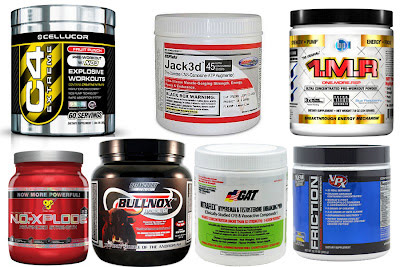
The “pre-workout” category of bodybuilding and fitness supplements has completely exploded over the last few years.
It seems that every supplement company (and that supplement company owner’s dog) has come out with their own “breakthrough” pre-workout formula promising huge increases in strength, performance, muscle growth and fat loss.
And although I always take a “No B.S” approach to every single supplement I review, there’s one very interesting fact about these products…

95% of them really DO work.

Yes, despite the hundreds (perhaps thousands) of different variations of pre-workout products lining the shelves at supplement stores across the country, the vast majority of them really DO increase muscular performance, mental focus and energy levels.
Amazing, right?
Well, not so fast.
See, there’s one common denominator here that makes this so. One very simple, anti-climactic fact…

Virtually all of them contain 100-300 milligrams of caffeine anhydrous in each serving.

No, the effectiveness of the majority of these products is not due to the “latest breakthrough research” in sports supplement science being released to the public for the very first time… It’s not the magical combination of ingredients hidden behind that top-secret “proprietary blend”… and it’s not the fact that it was formulated by alien-hybrid Russian scientists in an underground Siberian bunker…
No, in most cases, it’s mainly just the caffeine.
Before I go further, let me make this clear…
I am NOT saying that caffeine is the only ingredient research-backed to deliver acute effects on strength and performance in athletes. And I am NOT saying that there are no effective pre-workout formulas out there for a reasonable price that include other ingredients beyond caffeine. (Though I can only think of a couple off the top of my head)
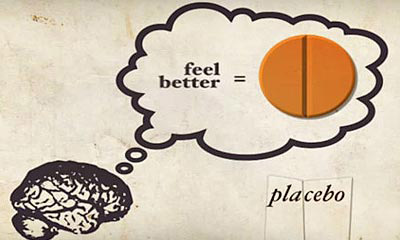
All I’m saying is that the majority of the effects you feel 30-45 minutes after sipping on that Radical Rockin’ Raspberry Rush (or, whatever) pre-workout drink is simply a combination of the study-dose of caffeine anhydrous (here is a good summary of the research on caffeine’s positive, measurable effects on strength and performance) and the basic placebo effect you experience when you consume a product with the positive expectation that it’s going to work.
Yes, I think l-tyrosine is a good pre-workout ingredient as well.
ALCAR can have some noticeable effects.
Citrulline malate may provide a small boost if you prefer a non-stimulant.
And yes, there are a few others out there that might be worth experimenting with as well, but they are few and far between.
However, none of these compare to basic caffeine – not in effectiveness, not in price.

And this is where the real problem arises…

It arises when any supplement company out there (or some random dude off the street – literally) can slap together 10, 20, 30 ingredients or more into a bottle (most of which are either totally ineffective, or somewhat effective but under-dosed), toss in a couple hundred milligrams of caffeine, hype the ever-living dog crap out of their product and then charge $67 a bottle for it.
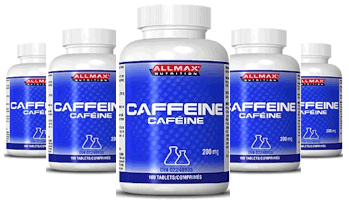
Yes, the product theoretically “works”, but unbeknownst to the person using it, they could have replicated most or all of its effects by just purchasing a bottle of caffeine anhydrous tabs for $4.
People often become defensive when I try to point this out, because they don’t want to hear that they’ve essentially wasted $40 a month or so for the past 3 years on the pre-workout product they’ve been using.
That’s understandable, but my only goal here is to help, and it should be seen as a positive thing since you can now use that $40 a month on things that actually matter… like food or your gym membership.
And as someone who has been researching bodybuilding and fitness supplementation for the last 12 years and who has owned a small supplement company in the past as well, I can tell you with certainty that most (definitely not all, but most) of the pre-workout category is a straight up hustle.
People often cite “flavoring” and “convenience” as benefits of using a pre-workout supplement…
But c’mon, flavoring?
Mix your pre-workout ingredients with some Crystal Lite, MiO or juice and it’ll taste just fine. Many of them are in pill form anyway.
And given that there are only a VERY small handful of pre-workout compounds even worth bothering with in the first place, I don’t see how “convenience” justifies the insane increase in price.
Besides, if you buy your pre-workout ingredients separately it will allow you to experiment with different dosages, or modulate the potency if necessary depending on your mood, energy levels or on the specific type of workout you’re performing.
I get that the marketing, fancy packaging and all that makes it “feel good” to use the product - but let’s come back to reality here.
Simple truth: The best pre-workout supplement available, by a good margin, is basic caffeine anhydrous at 100-300mg 30-45 minutes prior to training.
And the best part is, it will literally cost you a couple cents per serving.
If you want to create a small pre-workout stack and boost the effects further, add in 1-3 grams of l-tyrosine (also very inexpensive) as this amino acid works downstream from caffeine to increase energy and mental focus further.
If you still want to push things a bit further, acetyl l-carnitine (ALCAR) might be worth adding at a dosage of 1-2 grams.
Finally, if you’re sensitive to stimulants OR you want a full-on pre-workout stack that completely maximizes your performance, you can experiment with citrulline malate at 6-8 grams. (Though the research here is not extensive)
All of these ingredients would be taken 30-45 minutes before your session, ideally on an empty stomach. I’d also recommend only using them a few times per week, and taking a full 2 weeks off after 6-8 weeks of continued use.
What you personally decide to do will depend on your budget, sensitivity to stimulants, the effects you experience etc.
Many of you won’t even want or need any pre-workout ingredients at all (besides your pre-workout meal and perhaps a strong cup of coffee)… and all of you certainly don’t need an over-hyped, over-priced, under-dosed, under-researched (I could keep going here but you get the point) fairy-tale pre-workout blend that does not benefit you beyond 1 or 2 dirt-cheap ingredients and that may even be potentially dangerous to your health when used over the long term.